A successful wallpaper installation starts long before the first strip is hung.
One of the most important factors in achieving a clean, long-lasting finish is making sure the wall surface or substrate is properly prepared and suitable for wallcovering installation.
The most stable substrate for wallpaper installation is properly primed drywall. New drywall should be smooth, fully cured, and sealed with a quality wallpaper primer before installation. Proper priming helps control moisture absorption, improves adhesion, and allows future removal without damaging the wall surface.
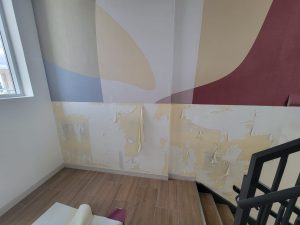
An often-overlooked issue in Phoenix construction is the type of drywall compound being used during wall finishing. Many drywall contractors now use lightweight yellow topping muds designed primarily for easier sanding and faster finishing. While these products work well for paint applications, they may not provide the binder strength required for wallcovering installations.
In the wallcovering industry, substrate strength is critical because wallpaper naturally tightens on the wall as adhesives dry. Weak or overly soft drywall compounds can fail under that tension, leading to surface delamination, seam stress, or adhesion problems. For this reason, stronger finishing compounds and proper priming systems are extremely important when preparing walls for wallpaper.
If lightweight yellow drywall mud is used, it is necessary to avoid coating the surface with standard latex paint prior to wallpaper installation. Instead, many professional installers prefer penetrating wallpaper primers such as Draw-Tite by Scotch Paint or Gardz by Zinsser. These penetrating sealers help stabilize soft drywall compounds and create a more secure surface for wallcovering adhesion.
While painted walls are very common in homes and commercial buildings, paint alone is not always considered an ideal wallpaper substrate. Most modern paints are latex-based coatings that primarily sit on the surface of the wall. During installation, wallpaper adhesives can soften latex paint, potentially allowing the wallcovering to slip or shift during hanging and the drying process. In some situations, weak paint adhesion can also contribute to future wallcovering failures if the paint releases from the wall underneath the material. Proper wallcovering primers are specifically designed to create a more stable surface for installation.
Plaster walls are also an excellent substrate when they are stable and properly repaired. Wood, laminate, metal, and specialty commercial surfaces may also be used when properly sealed and prepared.
No matter the substrate, proper wall preparation remains critical. Smooth surfaces, correct primers, strong wall compounds, moisture control, and professional installation techniques all contribute to a finished wallcovering project that performs beautifully for years to come.
I have attached a picture of what happens when paint is applied over the Yellow soft drywall topping mud.